Welcome to our little corner of the internet! 🌿
This is where we share the story of our family’s big leap into the unknown – a journey toward a more sustainable life, away from the comfort zone, and closer to nature.
Our dream is simple (but not easy): to become more self-sufficient, to learn how to grow our own food, and to take responsibility for the land we live on. And one fascinating idea we stumbled upon early on was Terra Preta – the legendary “black earth” that can transform even poor soils into fertile ground bursting with life.
But let’s be honest: we are total beginners. We’re not seasoned gardeners or soil scientists. Every seed we plant, every tomato that ripens, and yes, every failure too, is a chance to learn. And that’s exactly why we want to share our story – because real learning often happens through trial and error (and sometimes through spectacular mistakes).
Why Terra Preta?
For those who haven’t heard of it: Terra Preta (“black earth” in Portuguese) is a type of incredibly fertile soil found in the Amazon, created centuries ago by indigenous communities. One of its main secrets? Biochar – charcoal made from organic matter, which locks carbon into the soil and improves water and nutrient retention.
That sounded like exactly what we needed for our dream garden. So, naturally, we wanted to make our own biochar. Enter: the pyrolysis barrel.
The Pyrolysis Experiment
Pyrolysis is basically the process of charring organic material with little to no oxygen. Sounds simple, right? Just fire up some branches and let science do the rest.
Full of enthusiasm, we filled our newly acquired barrel with a mix of dry branches and hay. The plan was straightforward: light it up, wait patiently, and end up with beautiful, crumbly charcoal – the first step toward Terra Preta.
At first, things seemed to be going smoothly. A little smoke here, some crackling there. Nothing too dramatic.
But then – about fifteen minutes in – came the surprise. Out of nowhere, a loud bang echoed through the garden, followed by a tall, sharp flame shooting out of the barrel like a mini rocket launch. 😳
We stared at each other, half shocked, half amazed. Clearly, we had underestimated the drama potential of “just burning wood.”
From Half a Barrel of Charcoal… to Nothing But Ash
After the fiery spectacle, we decided to just let the barrel cool down and mind its own business. Two hours later, curiosity got the better of us. Carefully, we lifted the lid.
And there it was: a half-full barrel of actual charcoal! Victory at last! Well… almost.
The moment fresh oxygen hit the glowing embers, the charcoal instantly caught fire again. Our “success” started literally going up in smoke.
In a bit of a panic, we grabbed the hose and doused the whole thing with about 20 liters of water. Fire out. Crisis averted. We left it to cool overnight, relieved that we had at least saved part of our batch.
Or so we thought.
The next morning, when we eagerly checked our treasure, all we found was… ash. Fine, grey, useless ash. Every last bit of charcoal had been consumed. To make matters worse, the barrel itself had warped from the pressure of the earlier explosion.
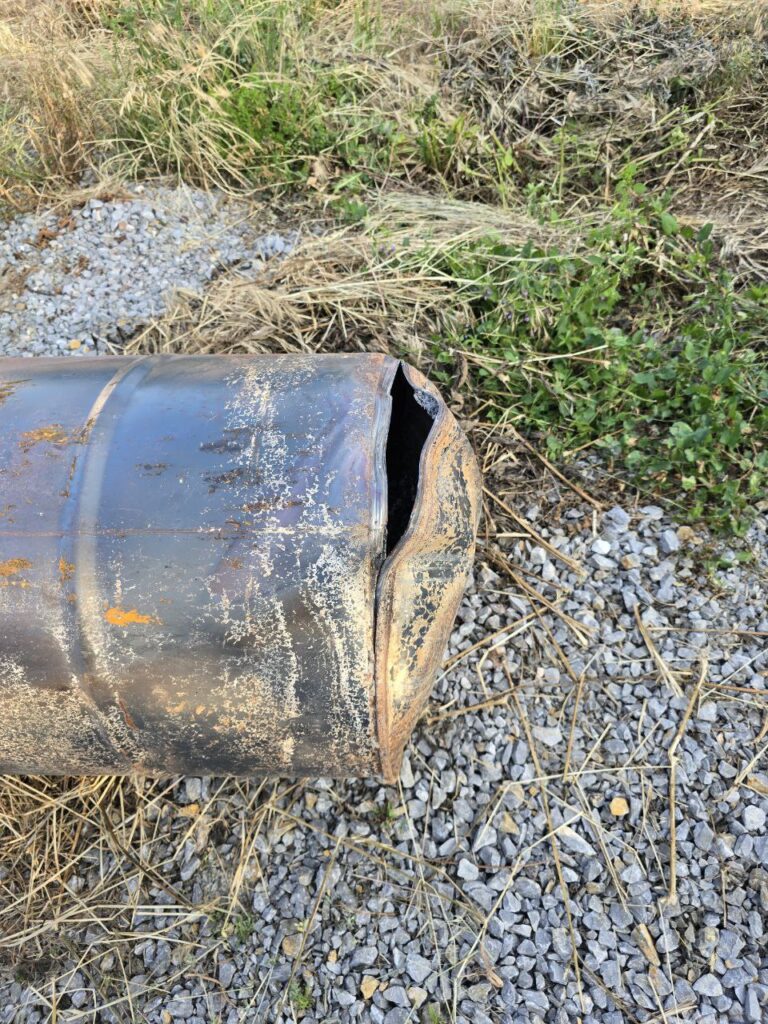
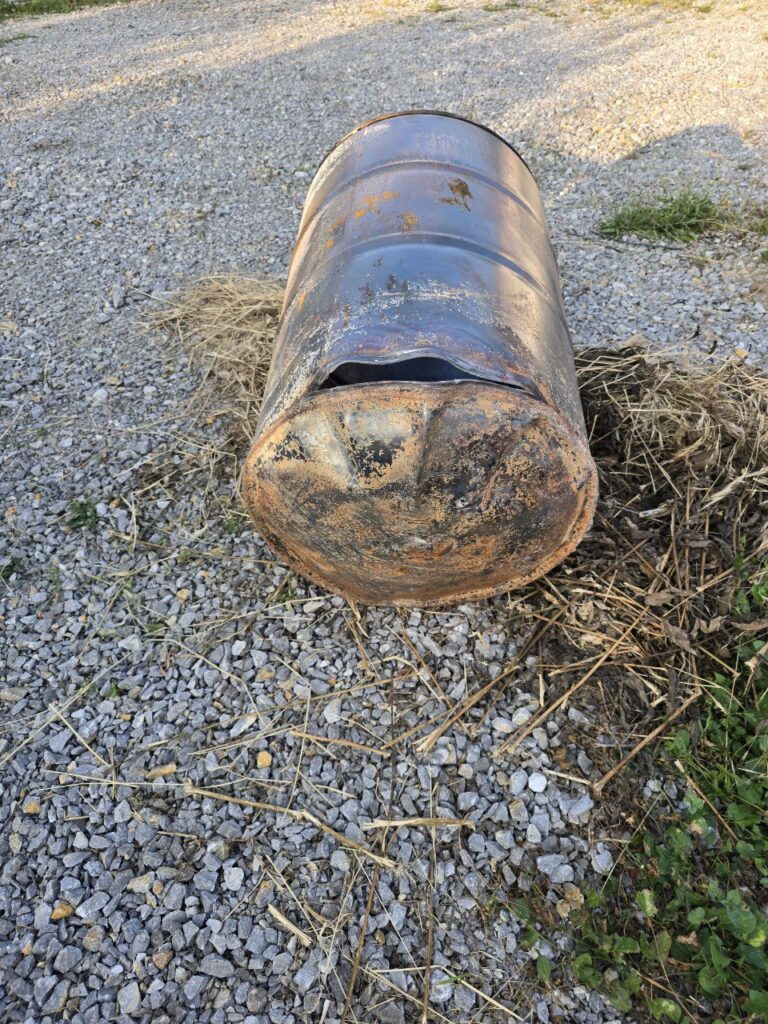
The lid, especially, looked like a before-and-after photo from a safety manual.
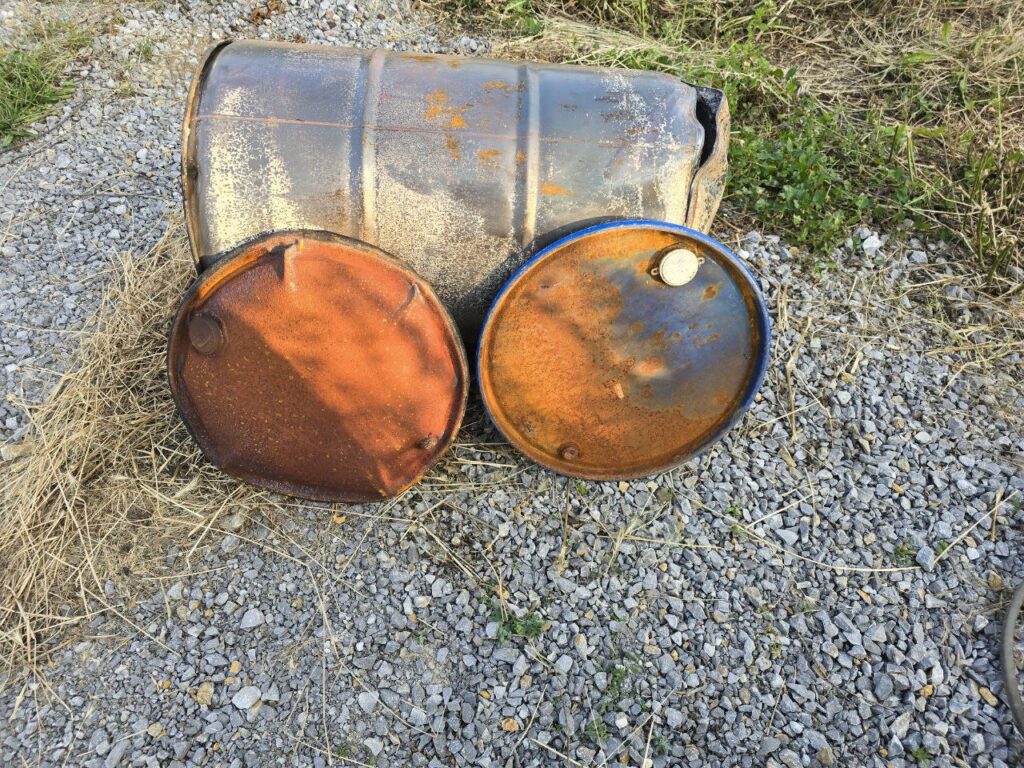
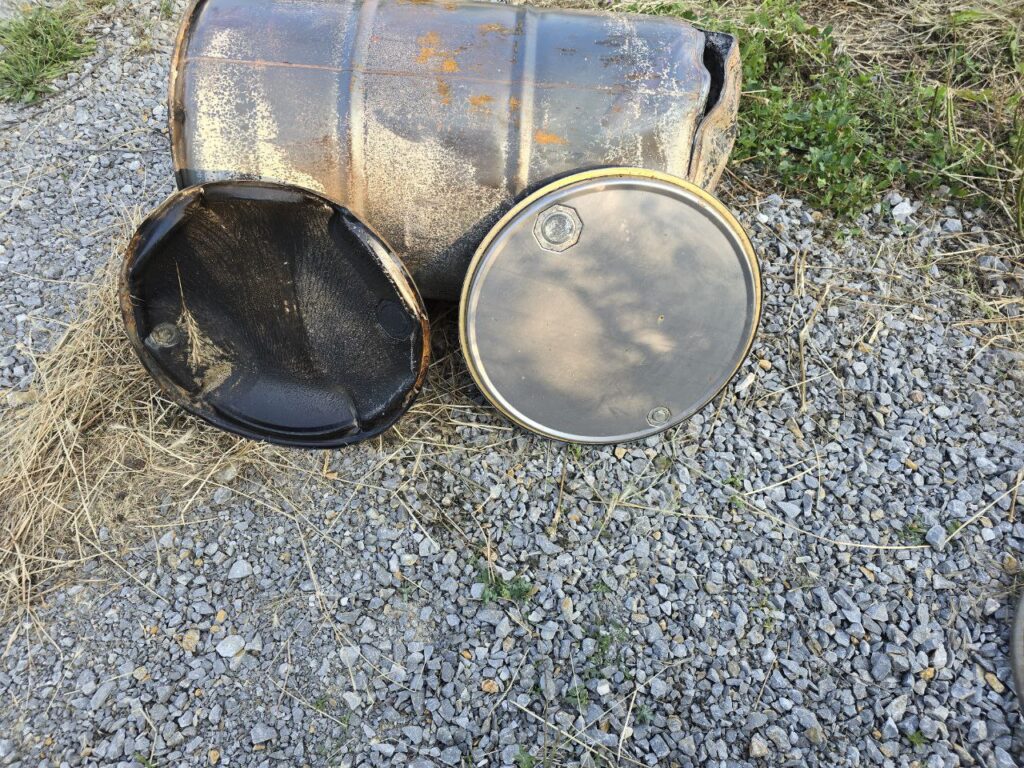
Lessons from Fire and Ash
Was it frustrating? Oh yes.
But in hindsight, it was also one of the most valuable lessons we could have asked for.
Here’s what we learned:
- Even the “simple” processes have hidden complexities.
- Oxygen is both your friend and your enemy when making biochar.
- We have a lot more experimenting (and learning!) ahead of us.
Most importantly, we realized that this journey toward a self-sufficient garden is not a straight road. It’s a winding path full of surprises, setbacks, and unexpected discoveries. And honestly – that’s what makes it exciting.
What’s Next?
Our first attempt may have gone up in flames (literally), but we’re not giving up. We’ll tweak, we’ll try again, and we’ll keep sharing the good, the bad, and the downright ridiculous with you along the way.
So stay tuned – the pyrolysis barrel story isn’t over yet. And who knows? Maybe the next time we open the lid, we’ll finally strike black gold.