Sometimes things just don’t go as you want them to. My first attempt with the pyrolysis barrel was one of those moments. Although the idea of getting valuable charcoal and gas from biomass is fascinating, the desired success did not materialize. The gray matter in my head (and probably also in the barrel) signaled: Something has to change!
But he who gives up has already lost! Instead of burying my head in the sand, I activated the gray cells and planned a complete rebuild of the pyrolysis barrel. And I am convinced: This will make the crucial difference.
The Problem: A too small “breathing hole”
In the first attempt, there was a crucial bottleneck: The hole for the gas outlet was a tiny 8 millimeters. Sounds like a lot, but it isn’t when you consider the quantities of pyrolysis gas that are created during the thermal decomposition of wood or other biomass. The result? A gas backup in the barrel, an inefficient process, and probably also the reason for the not-so-exhilarating results.
Imagine you want to empty a full bathtub and only have a straw for it. That’s exactly what it was like!
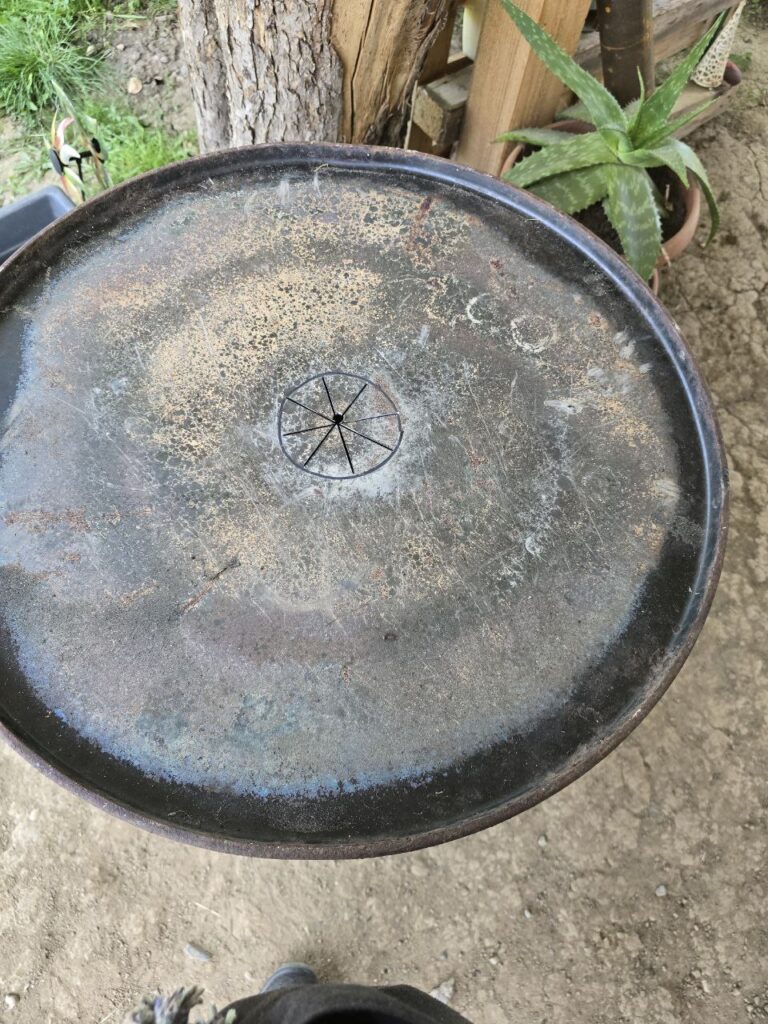
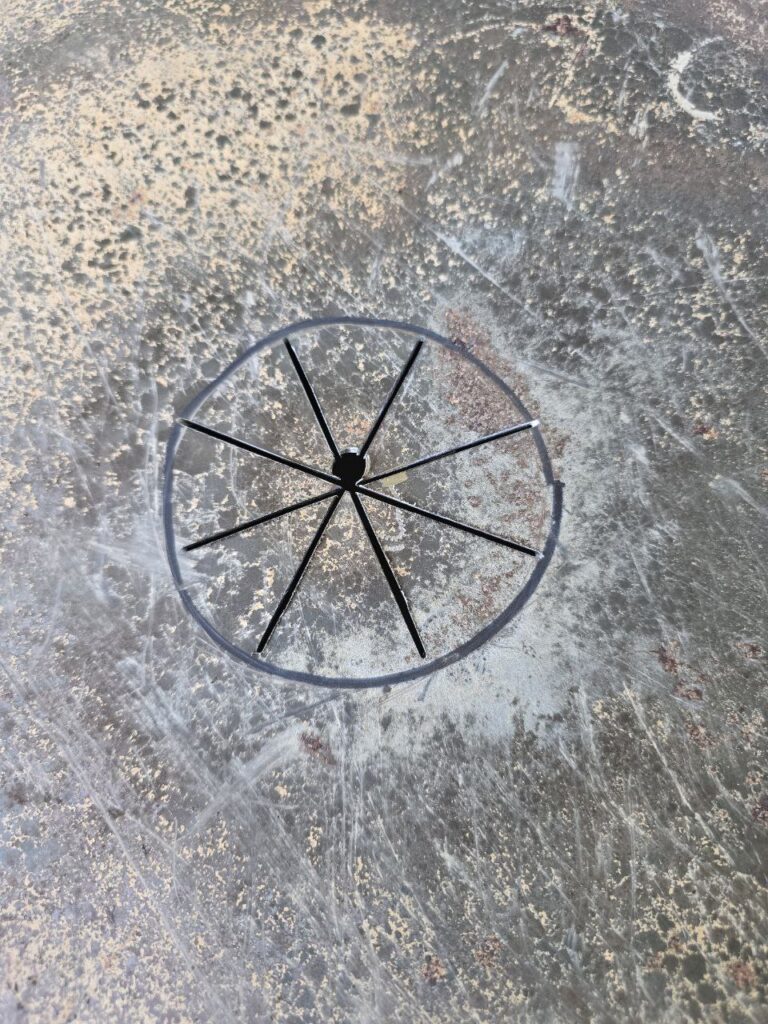
The Solution: Big pipe, big effect!
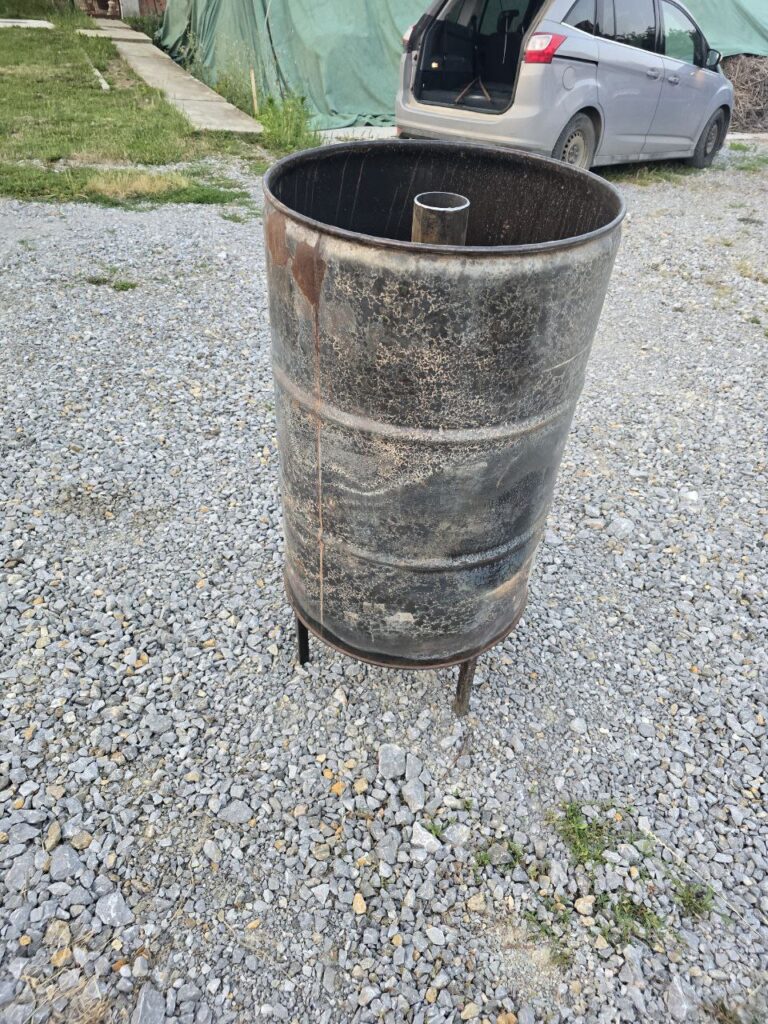
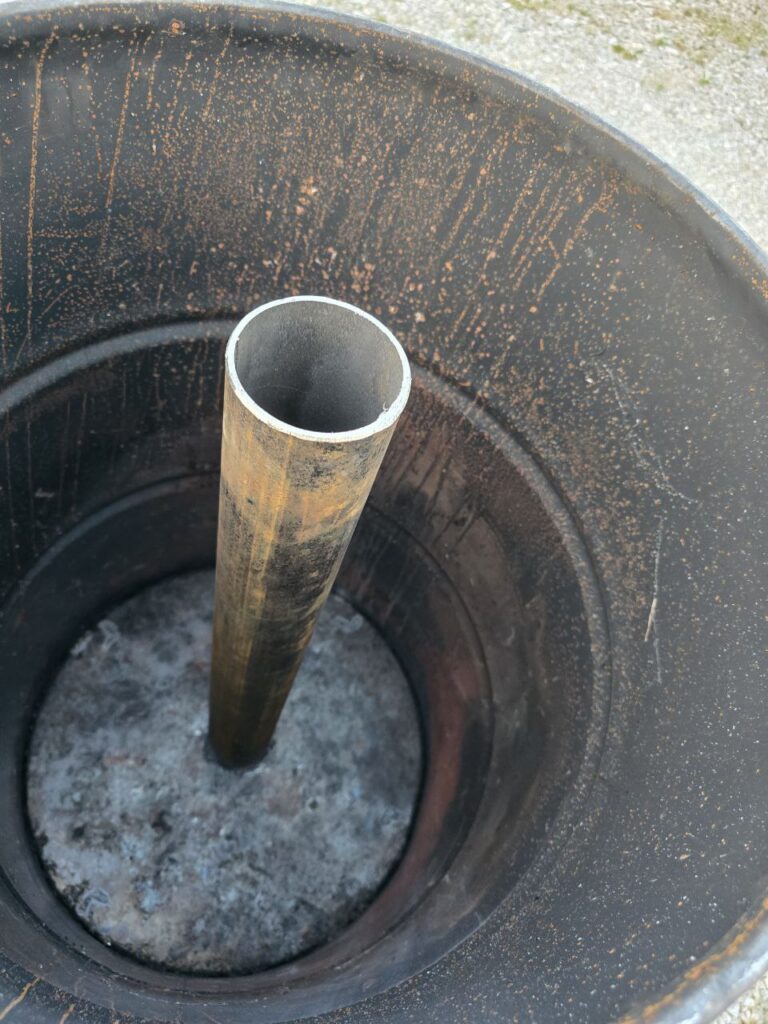
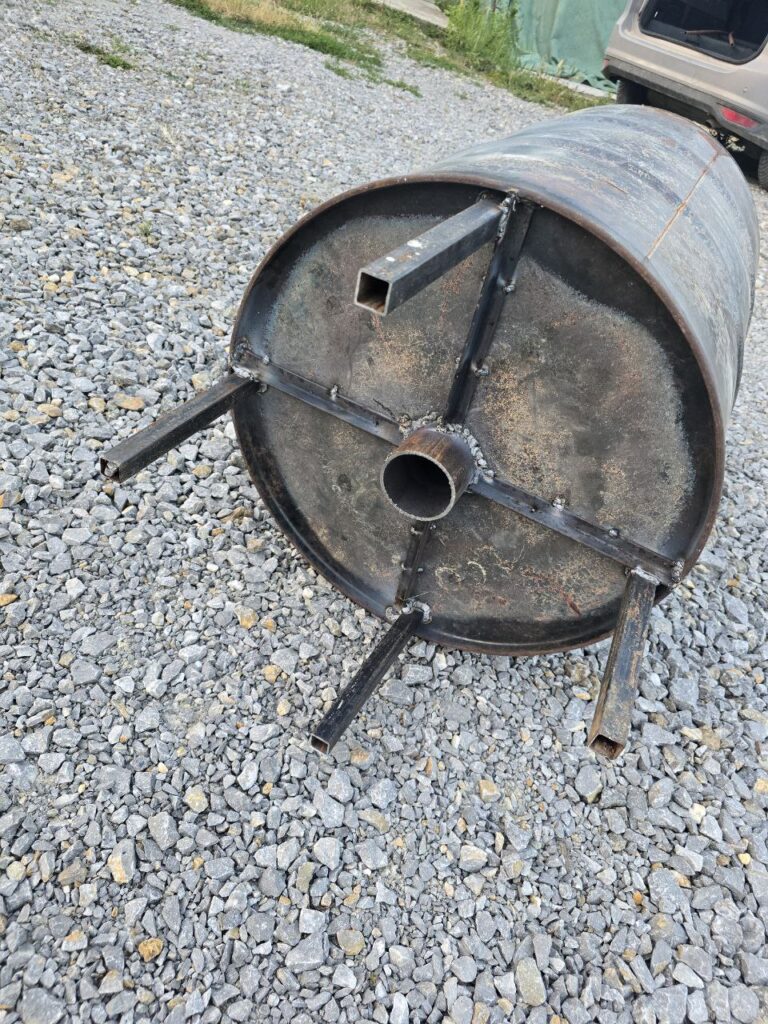
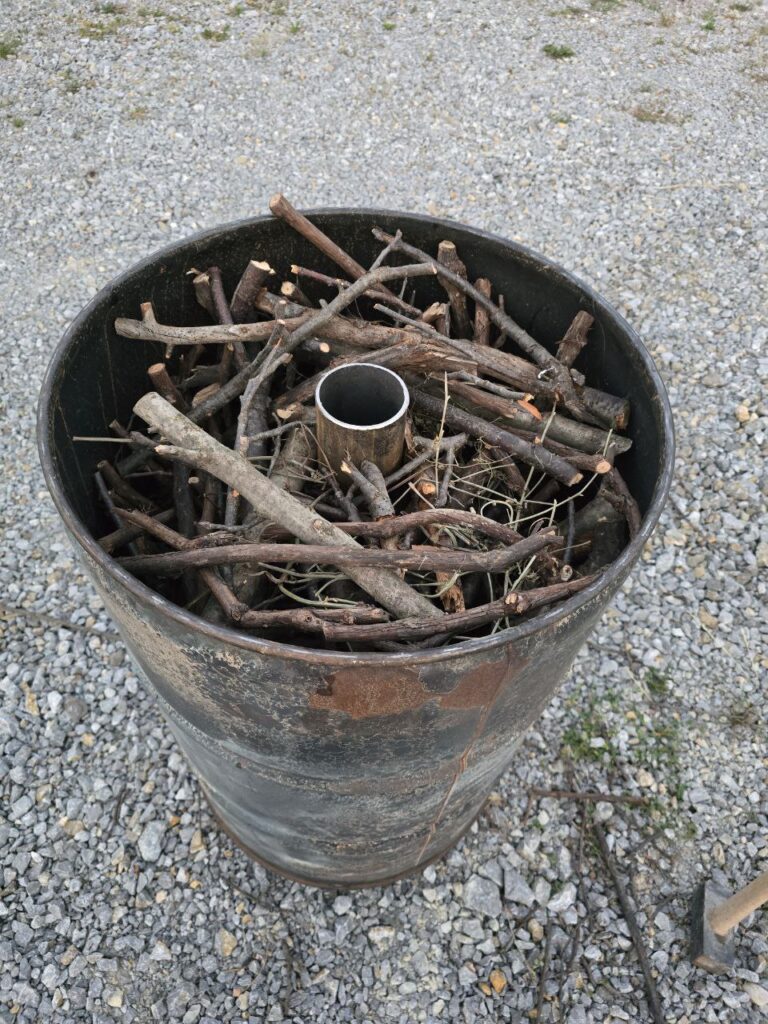
The new strategy is as simple as it is effective: The tiny 8-mm hole is enlarged to a full 8 centimeters in diameter! That’s a factor of 100 in area! A 90 cm long 3-inch steel pipe is now threaded through this generous opening.
Why this is so important:
- Free passage for the gases: With an 8 cm diameter and the 3-inch pipe (approx. 7.6 cm inner diameter), the pyrolysis gas finally gets the “highway” it needs. It can escape from the barrel freely and unhindered, without a backup. This leads to a significantly more efficient pyrolysis process.
- Minimal pressure buildup: Less backup means less pressure. While the pressures in such hobbyist pyrolysis barrels are rarely dangerous, too much back pressure can negatively affect the process. The new dimensions significantly minimize this risk and ensure a controlled discharge of the gas.
- Robust and safe: The steel pipe is welded in and additionally secured with three struts at the top and bottom. This ensures an extremely stable and, above all, gas-tight connection. No unwanted gas leaks at the seam! Steel also easily withstands the high temperatures and the gas’s components, which guarantees a long service life.
What’s next?
With this crucial improvement, I am confident that the Pyrolysis Barrel 2.0 will be a complete success. The pyrolysis gases can now be efficiently vented and fed to combustion, which closes the loop and makes the process’s energy usable.
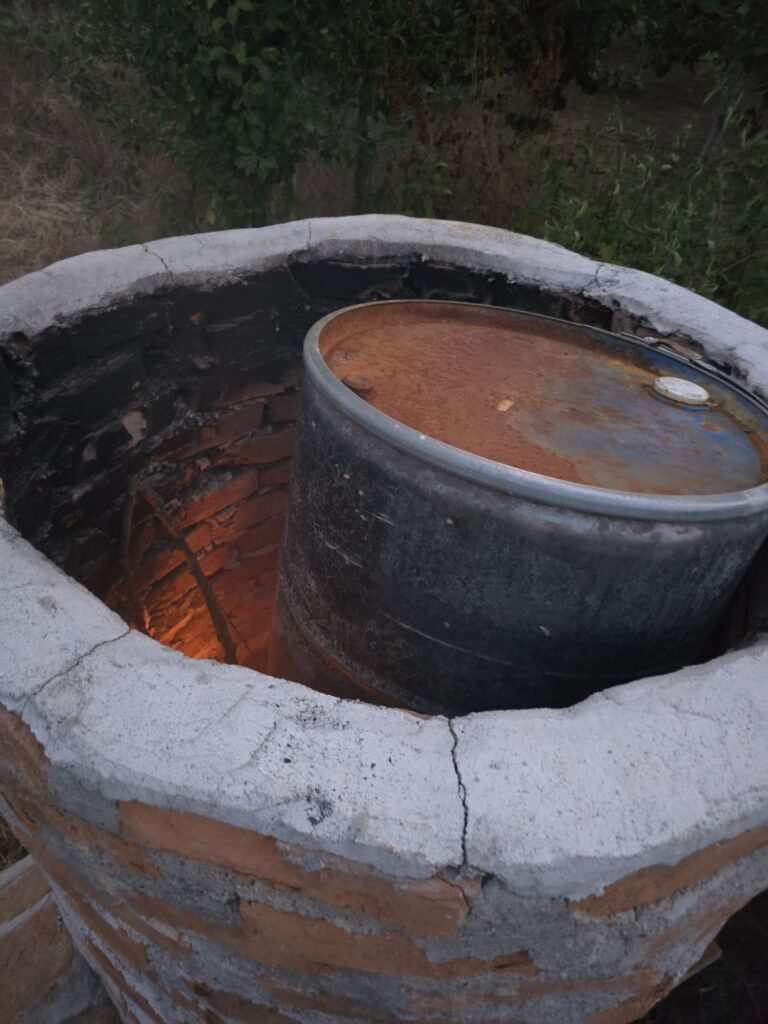
I’ll keep you updated on how the second attempt with the rebuilt barrel goes! Have you also gained experience with pyrolysis or have tips for operation? Let me know in the comments!